Cross-border legal intelligence · China & the world
Analysis, practice notes and commentary in this area from China Law Insider.

From 1 September 2026, dividends paid by foreign-invested enterprises to foreign individual shareholders are taxed at 20 per cent, ending an exemption in place since 1994—with no transition period and no carve-out for profits already accumulated. Official commentary suggests most investors will see no net increase. A client alert on who actually pays more, why treaty relief must be claimed before payment, why restructuring is not a free exit, and what FIEs and their shareholders should do now.
Read the article →
With its island-wide special customs regime in force since December 2025, the Hainan Free Trade Port has moved from policy blueprint to working economic pilot. An assessment of the dual-border “first line, second line” model, the concrete opportunities now open in trade, healthcare, tourism and advanced industries, and the governance risks that will decide whether China’s most consequential opening-up experiment succeeds.
Read the article →
Part four of a four-part series. Should a company satisfied with its existing counsel nevertheless maintain a relationship with a second firm? The answer is generally yes — not from dissatisfaction, but because loyalty should never eliminate independent judgment or optionality. On second opinions as good governance, and why the case is strongest precisely when the stakes are highest.
Read the article →
Part three of a four-part series. Once a company has found counsel it trusts, how should the relationship be structured? The case that an annual retainer is not primarily a pricing mechanism but a relationship and risk-management one — examining limited versus unlimited quick-question retainers, and why the most valuable call a client makes is often the earliest one.
Read the article →
Part two of a four-part series. When does a company genuinely need outside counsel, and when is Big Law the right answer rather than the automatic one? On why you do not hire a law firm but lawyers, responsiveness as a component of legal competence, and why cross-border work demands global experience and local expertise in the same adviser.
Read the article →
Part one of a four-part series. After four decades of practice, much of it spent inside multinational companies rather than advising them, a lesson that reshaped an approach to lawyering: a technically correct legal answer is not necessarily a useful business answer. On the 25-page memorandum problem, and why the most valuable advice moves from "no" to "how".
Read the article →
Reflections from an energy and petrochemical M&A transaction: why the value of due diligence lies not in the number of risks identified, but in how effectively those risks are translated into transaction advantages for the buyer.
Read the article →
As foreign-invested enterprises (FIEs) , including wholly foreignowned enterprises (WFOEs) and Sino -foreign joint ventures (JVs) , remain integral to China’s economic landscape, they face potential legal risks tied to operational violations that could trigger criminal investigations.
Read the article →
The global business community has spent the past few years recalibrating its view of China.
Read the article →
Short summary for readers: In Article 1, we explained why many Western companies misjudge today's Chi-na—the mid-tech bottleneck, the new risk environment, and the trap of binary thinking.
Read the article →
Late last year, the Interpretation II of the Supreme People's Court on Issues Concerning the Application of Law in the Trial of Labor Dispute Cases (“Interpretation II”) and the Guidelines for Enterprises on Compliance in the Implemen-tation of Non-Compete Agreements (“Compliance Guide-lines”) were
Read the article →
For foreign investors entering China, the first strategic decision is rarely about products, customers, or even geography, but about structure.
Read the article →
There is a particular kind of vertigo that accompanies doing business across borders today.
Read the article →
As part of a series of articles co-authored by IPO Pang Shenjun PLLC and Culbert Ellis, both members of the International Commercial Law Alliance (“ICLA”), the authors exam-ine key distinctions between English and Chinese contract law, particularly in relation to the selection of governing law and j
Read the article →
For many years, employers in China relied on what appeared to be a clear statutory framework: fixed-term employment contracts could be renewed once, and upon expiration of the second term, an employer could elect not to renew without necessarily incurring ter-mination liability.
Read the article →
In 2026, China introduced two major regulatory updates affecting the steel industry: restored export license management and revised Steel Industry Normative Conditions.
Read the article →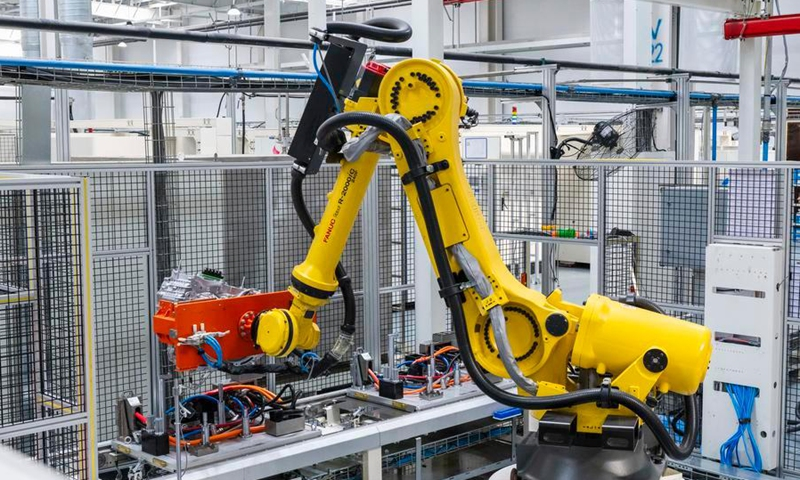
Below, we set out the four key policy pillars that emerged from the 2026 Two Sessions and what they mean in practice for foreign-invested enter-prises (FIEs) operating in or considering entry into the Chinese market.
Read the article →
For more than two decades, multinational companies approached China with a straight-forward strategic formula.
Read the article →
For three decades, foreign companies saw China as an unmatched manufacturing hub and a vital source of global demand.
Read the article →
On D ecember 27, 2025, China unveiled a New ly Revised Draft Trademark Law (“New Trademark Law”) for public comments for a period of 45 days, namely, from December 27, 2025, to February 9, 2026.
Read the article →
The February 2026 US-Israel strike on Iran rattled oil markets and the dollar. China's energy self-sufficiency and stockpiling left it comparatively insulated, and international investors from HSBC to Goldman Sachs are taking notice.
Read the article →
Eight government departments want more than 160 dedicated tourist trains by 2030. But with household savings at record highs, the plan looks less like rail policy than a demand-stimulus experiment in tourism language — and it carries real market-access signals for foreign operators.
Read the article →Over 20 years of advising international companies entering China, the difference between success and failure rarely comes down to product quality or company size. It comes down to two fundamentals that foreign companies consistently underestimate.
Read the article →
Two immediate-effect State Council decrees expand China's ability to counter foreign extraterritorial measures, raising new diligence, supply-chain and personal-liability risks for investors and deal teams.
Read the article →







Urgent-looking emails claiming your domain or trademark is about to be lost are almost always solicitation scams. They are also a reminder of why first-to-file registration matters.
Read the article →
China matters because it continues to see significant improvement in the development of intellectual property (“IP”) right protection. In 2017, the country received 1.38 million invention and utility patent applications, a 14.2 percent increase from the…
Read the article →
Anyone that has ever been to China at least once will be familiar with the internet censorship that one can expect to experience while visiting or living in the country. One common way of circumventing the problem is using what is called a Virtual Private…
Read the article →
In the world of politics, no one does it better than China’s President Xi Jinping. Like a smart day trader on Wall Street: buy low, sell high. But the key is, when to buy and when to sell; like the gambler song made famous by Kenny Rogers: Got to know when to…
Read the article →
China, the final economic frontier, the world’s second-largest economy and a region with over 1.3 billion people, is a force to be reckoned and a partner, competitor and/or fellow superpower that must be fully understood, its policies be surgically dissected…
Read the article →
Pricing clauses in distribution agreements are among the most frequently overlooked exposures under the Anti-Monopoly Law, and the courts and the NDRC do not enforce them the same way.
Read the article →
China’s reputation for its flagrant use of pirated software is well established throughout the world. According to a 2017 US News article , over 70 percent of computers in China run unlicensed versions of common software. This is the highest level of use of…
Read the article →
The courts in China are faced with an uphill battle in maintaining their independence at both an internal and external level. The Chinese judiciary’s close affiliation with the Party as well as the hierarchical nature of the court system has resulted in…
Read the article →
Effective since 18 July 2017, the German government strengthens control on attempts to take over German companies by investors from outside the EU or EFTA by a respective amendment of the Foreign Trade Ordinance (“Außenwirtschaftsverordnung”). The Middle…
Read the article →
Landlord and Tenant Rights in China Many foreign nationals have flocked to China’s largest cities in recent years, only to find that both the property market as well as Chinese landlord-tenant law are substantially different than in other jurisdictions. By…
Read the article →
Intellectual Property and Branding in China’s Business Climate A common question in Chinese intellectual property (IP) law posed by many foreign businesses and counsels when they first begin operation in the PRC is the extent to which Chinese characters and…
Read the article →
Investments and Business Ventures in China China’s infamous attempt at exercising control over its inbound foreign investments is embodied by the yearly issuance of the Catalogue for the Guidance of Foreign Investment Industries (the Catalogue). For many…
Read the article →
China’s Driving Laws As China’s economy has continued to experience economic growth at a rate unparalleled among modern economies, the country’s GDP has expanded at a rate of nearly 6-7% per year for more than 20 years. The Chinese economic miracle doesn’t…
Read the article →
Trade Secrets in China The challenge is thus how a Chinese company can protect its trade secrets when an employee quits to either start a competing business of his or her own or to join a competitor without violating PRC law in the process As China continues…
Read the article →
ICP License and China Law The Internet has exploded in China, and some of the world’s leading e-commerce and other web-based business like Alibaba, WeChat and others have originated from the PRC. However, the PRC does exercise stricter control over the…
Read the article →
China Law And Protecting Trademarks China is a “first registration ” jurisdiction when it comes to trademark protection, meaning that the first individual or corporate entity to register a trademark will generally take priority over subsequent applicants.…
Read the article →
MOFCOM's shift from approval to online registration cut months from the timeline for wholly foreign-owned enterprises. The steps are simpler, but the traps for the unwary remain.
Read the article →
China Employment Law and Employee Handbooks In many Western countries, written employee handbooks have been standard practice for most employers for decades. These handbooks provide a uniform set of guidelines that the employer follows in terms of employee…
Read the article →
Do you need help withdrawing your business from China? Although it may seem sheer lunacy to some due to the rapid growth of the Chinese economy in recent decades, particularly with its status as the world’s second largest economy, some iconic Western brands…
Read the article →
China Independent Contractor Lawyers As its economy has evolved China’s labor laws have also evolved. While independent contractors, an increasingly common trend in the United States and Japan, the world’s first and third largest economies, respectively,…
Read the article →
Direct cross-border franchising is permitted, but the 2+1 rule, mandatory pre-signing disclosures and trademark localisation decide who succeeds in the market.
Read the article →
Under Chinese law, every company must have a legal representative when starting a company or opening a new business in the PRC. A company’s legal representative is the individual who serves as the legal embodiment of the company’s interests for purposes of…
Read the article →
Many foreign businesses are reluctant to register their brand name into Chinese, assuming that the brand will be recognizable, distinctive, and protected by one trademark filing. In reality, it is critical to ensure that the trademark name is also registered…
Read the article →
Much of the world, China included, is in shock over the recent election of billionaire property developer and TV reality shows mogul Donald J. Trump in the United States. All of the pre-election polls, and even many of the leaders of Mr. Trump’s own…
Read the article →
The EB-5 visa is a United States visa program for immigrant investors that was first instituted by the federal Immigration Act of 1990. The EB-5 visa provides means to obtain a green card, and eventually a path to permanent residency in the United States, for…
Read the article →
The Companies Law of the People’s Republic of China requires that all foreign-owned corporate entities have a registered physical address in China. However, many foreign investors have gambled (and lost) that Chinese authorities will not catch on if they…
Read the article →
In a recent development that could either spell great news or a reason for fear for foreign workers in China, on September 9, 2016, China’s State Administration of Foreign Experts Affairs (“SAFEA”), one of two Chinese government agencies currently charged…
Read the article →
As anyone who knows remotely anything about China can tell you, let alone anyone who has lived or is currently living in China, interest in teaching English in China by native (or not) English speakers has grown exponentially as China’s economy has exploded…
Read the article →
What’s new with China foreign investment laws? On September 3 2016, the Standing Committee of the National People’s Congress of the Peoples’ Republic of China (NPC) adopted the amendments which modified the rules relating to the establishment and alterations…
Read the article →
What does a deck of playing cards and a lighter have in common? ‘Nothing’, one could argue. On December 30th 2015, the Beijing No.1 Intermediate People’s Court argued otherwise and endorsed a creative argument in a case involving the world’s largest playing…
Read the article →
When the Opening Up process first began in China some three decades ago, the country had very little legislation on the books regarding employment standards for private industry. As the country’s economy moved further and further away from reliance on…
Read the article →
Chinese Business Lawyers Doing business in China opens up unlimited possibilities for business growth . It also exposes the unprepared investor to significant risks. Our years of experience helping countless ventures to get off the ground and succeed in China…
Read the article →