
For three decades, foreign companies saw China as an unmatched manufacturing hub and a vital source of global demand. That as-sumption is now being tested. China’s economy has moved beyond double-digit growth, rapid property expansion, and massive infra-structure spending, entering a mature phase defined by slower growth, demographic pressures, weaker consumer confidence, and rising geopolitical tensions. Yet despite these challenges, foreign investors still view China as too important to ignore. The central question is no longer whether China matters, but how businesses can operate profitably in an environment of moderated growth, increased regulatory scrutiny, and permanent geopolitical risk. Recent economic data shows contradiction. While GDP growth has slowed significantly from the 1990s and 2000s, Beijing still targets roughly 5% annual growth, reflecting the economy’s size and a focus on long-term stability. China is transitioning from a real estate and infrastructure-driven model toward one centered on advanced manufacturing, technology, and strategic indus-trial policy.
Several traditional drivers have weakened. The property sector, once a source of house-hold wealth and government revenue, faces prolonged instability after debt crises at devel-opers like Evergrande. Consumer confidence is uneven, youth unemployment is a concern, private investment has softened in some indus-tries, and foreign direct investment has de-clined amid economic caution and geopolitical uncertainty. However, focusing only on slowing growth misses a critical reality: China remains deeply embedded in the global economy. For many industries, there is no realistic substitute for China’s manufacturing ecosystem, infrastruc-ture, skilled labor, and supplier networks. This is especially true in advanced manufac-turing. China dominates global supply chains for electronics, batteries, renewable energy technology, industrial machinery, pharmaceu-ticals, and consumer goods. It also plays a cen-tral role in processing critical minerals for electric vehicles (EVs) and clean-energy sys-tems. Even companies pursuing “China-plus-one” strategies often find that alternatives in Southeast Asia or India still rely on Chinese upstream suppliers. Diversification usually means supplementing China, not replacing it. This structural dependence explains why many multinationals remain committed de-spite geopolitical friction. Surveys from for-eign chambers of commerce consistently show that many businesses, especially in technology, healthcare, industrial manufacturing, and re-search-intensive industries, view China as a critical long-term market. The scale of China’s domestic consumer mar-ket also drives resilience. Its middle-income population remains enormous globally. Sec-tors like healthcare, EVs, logistics, luxury goods, and industrial automation continue at-tracting international participation. While overall growth has moderated, industries tied to Beijing’s long-term industrial priorities are expanding aggressively.
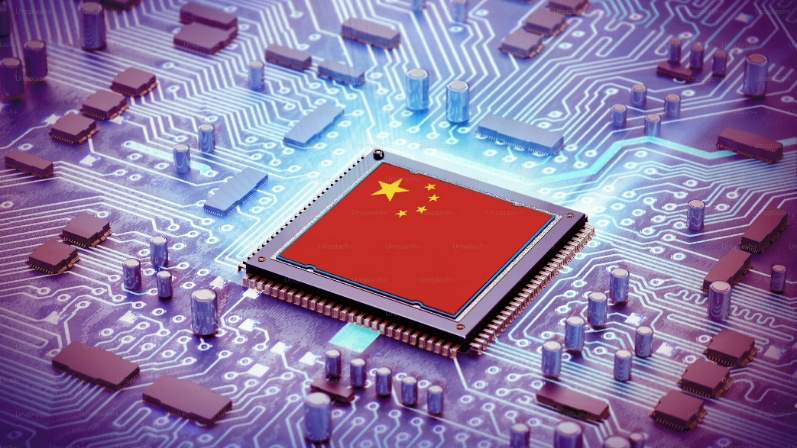
A defining feature of China’s current strategy is the government’s push for technological self-sufficiency and industrial upgrading. Bei-jing prioritizes semiconductors, AI, EVs, ro-botics, renewable energy, biotechnology, and high-end manufacturing. This shift reflects both economic ambition and geopolitical ne-cessity, as China responds to export controls, sanctions, and strategic competition with the US and its allies.
For foreign investors, this creates a more com-plex environment. Opportunities remain sub-stantial, but market access increasingly inter-sects with national security concerns, indus-trial policy, and data governance. Companies must evaluate not only profitability but also regulatory exposure and political sensitivity. This regulatory dimension has become a defin-ing characteristic of modern China. In recent years, China has expanded laws governing cy-bersecurity, cross-border data transfers, anti-espionage, and national security reviews. Laws such as the Cybersecurity Law, Data Se-curity Law, and Personal Information Protec-tion Law have reshaped compliance for both domestic and foreign firms. Data localization, cybersecurity reviews, and restrictions on sen-sitive industries materially affect how multina-tionals structure operations and transfer infor-mation internationally. At the same time, multinationals face pressure from their home jurisdictions. US export con-trols on advanced semiconductors, outbound investment screening, and technology re-strictions have altered cross-border planning. European governments emphasize “de-risking” to reduce strategic dependence on Chinese supply chains without full decoupling. Consequently, foreign investors operate under overlapping and sometimes competing regula-tory systems. A transaction permissible under Chinese law may trigger US or European scru-tiny. Corporate strategy now requires coordi-nation between legal, compliance, operational, and geopolitical risk teams, which was rarely necessary two decades ago.
Importantly, many companies are adapting, not withdrawing. Instead of abandoning China, they are redesigning supply chains, localizing operations, diversifying manufacturing geog-raphy, and separating sensitive technology functions from broader commercial activity. The emerging model is strategic risk manage-ment, not wholesale disengagement. The broader geopolitical environment rein-forces the need for long-term planning. US-China trade tensions continue to affect tariffs, export restrictions, and investment screening. Simultaneously, China is expanding commer-cial ties across Asia, Latin America, Africa, and the Middle East through infrastructure and supply-chain integration linked to the Belt and Road Initiative. For investors, China remains central to the future of global trade, even as the international system fragments. The era of viewing China solely as a low-cost manufacturing base has ended. A modern China strategy requires a sophisticated ap-proach integrating economics, geopolitics, compliance, operational resilience, and long-term risk assessment. Companies relying on old assumptions may be unprepared for to-day’s environment.
Conversely, overreacting to short-term volatil-ity risks missing substantial long-term oppor-tunities. China’s economy may be slowing rel-ative to its history, but it remains one of the world’s largest and most technologically sig-nificant markets. It still possesses extraordi-nary industrial capacity, advanced infrastruc-ture, deep human capital, and an increasingly innovation-driven economy. Ultimately, the future of foreign investment in China will not be defined by simplistic narra-tives of collapse or limitless opportunity. The reality is more complex. China is transitioning from rapid expansion to strategic competition, industrial transformation, and regulatory so-phistication. Growth is slower, risk is higher, and compliance is more demanding. Yet China remains indispensable to global commerce in ways few economies can replicate. For foreign investors, the challenge is not whether to engage, but how to engage intelli-gently. Businesses that combine disciplined governance, sophisticated legal planning, geo-political awareness, and operational flexibility will likely remain positioned to benefit from one of the world’s most consequential markets for years to come.