
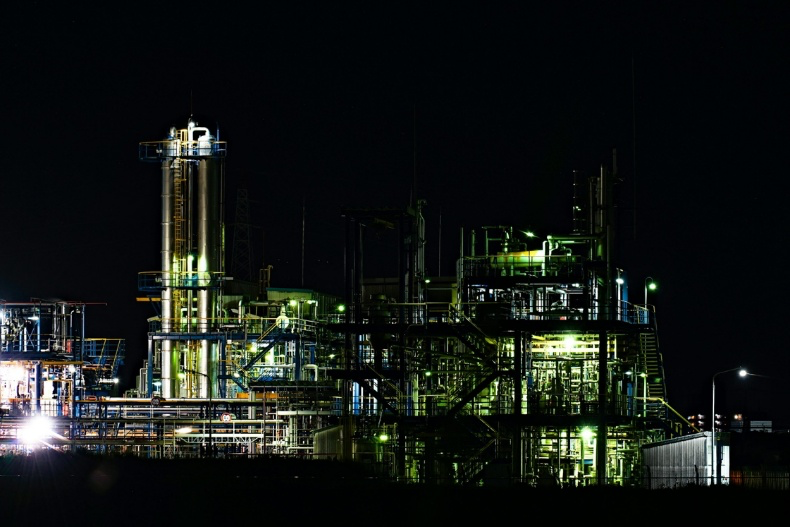
On February 28th, the United States and Israel launched a joint surprise attack on Iran, a key exporter of oil in the global economy. As a result, oil and gas prices surged dramatically around the world, with oil prices surging to over $100 a barrel and European natural gas prices nearly doubling. Iran also closed the Strait of Hormuz during the war, disrupting global supply chains and furthering economic shocks. Additionally, regional tourism revenue declined heavily, with thousands of flights within the Middle East being cancelled on a daily basis. The Dow Jones fell by over 400 points and the S&P 500 also dropped following these financial disruptions, highlighting the instability within our global economy. The Gulf states, in an effort to accommodate and recalibrate their economies following these disruptions, are being forced to diversify their economies into industries that can withstand geopolitical shocks, bringing opportunity to foreign investors.
Given that these disruptions are a direct consequence of an attack initiated by the United States, investors are prompted to diversify their assets away from the American dollar. This also follows America’s intervention in Venezuela in January of this year, emphasizing America’s rising militarism within the international stage and possible future financial instability, should America continue to intervene in foreign countries. Domestic issues have also sparked insecurity within America’s financial sphere, such as chronic debt disagreements, government shutdowns, and America’s ability to freeze dollar-denominated assets following geopolitical disputes. Moreover, investors are looking to target industries that are more secure from geopolitical disruptions and are poised to benefit from the new global environment, such as energy, technology and infrastructure. As such, since assets must be relocated into developed industries and America, one of the largest global economic superpowers, has proved to be exceptionally volatile in recent months, it’s only natural that investors turn to the other largest market in the global economy: China.
China’s Relative Stability
China’s economy has proved to be immensely stable relative to the rest of the world, given the country’s mass transition to electric vehicles and increased stockpiling of oil shortly before the war broke out. Although China was one of the largest buyers of oil from the Strait of Hormuz, China’s energy portfolio is so diverse that oil from the strait only accounted for 6.6% of the entire country’s energy usage, and China’s overall energy self-sufficiency rate reached 84.4% in 2025. China has also stockpiled food through the Black Sea Grain Initiative, protecting local food prices from possible international interferences and ramifications from the Middle Eastern conflict. As such, China’s economic security is extremely secure, and her local economy has been minimally affected by these supply chain disruptions.
Moreover, China secured food from the Black Sea Grain Initiative through diplomacy with Russia, utilizing unique leverage that the United States does not have and reinforcing China’s role as a stabilizer and facilitator of international commerce, as opposed to America’s more militant approach. Regardless of international turmoil, China’s domestic sectors continue to grow.
Additionally, China has already proven itself to be the leader of renewable energy utilization, as the green energy sector drove more than 90% of China’s investment growth in 2025. While the United States continues to promote fossil fuel usage, whose prices are extremely dependent on the political stability of a select few regions, China has invested into clean energy whose reliability and financial costs stand independent of international turmoil. These developments coincide with the Middle East’s rekindled “Look East” investment initiative, which seeks to align the region towards the Eastern bloc following America’s invasion, as well as help stabilize the region from future regional uncertainty.
International Investors Are Already Moving
As investment into Chinese assets continue to rise, so too will profits, prompting all global investors to invest early for large returns. While America continues to disrupt the global environment in an effort to further political agendas, China stands as a certainty of continued growth, able to promote stability for developed and developing countries alike.
International investors are already acting to invest in China. For example, HSBC, a London-based private bank, stated in its March 2026 analysis that it remains overweight on Chinese equities, implying that the conflict has created entry points into Chinese investment rather than justified avoidment. Goldman Sachs, a New York based institution, has also cited investment into Chinese AI models, such as Deepseek, which they found to be significantly undervalued compared to their Western counterparts. These investments run parallel to China’s long-running Belt and Road Initiative, which seeks to be a new global economic structure that runs independently of Western governance. The initiative also hopes to transition the global economy away from over-relying on certain supply chain choke points, such as the Strait of Malacca and Strait of Hormuz, increasing the global economy’s durability as a whole.
As such, investments into China are not only placing their capital against American volatility, but are also investing into part of the new global economy that will continue to shape the rest of the 21st century.
A Case for Stability
While the attacks on Iran furthered American political agendas, it also projected the rising instability of the American dollar. The conflict has reinforced that alternatives to American capital must be found in the global economy, naturally turning investors to China. China has proved its own self-sufficiency and has already laid out the foundation for a more independent global economy, preemptively finding solutions to problems brought forth by the conflict. In an unpredictable global climate, the most valuable asset to invest into is stability, of which China epitomizes flawlessly.
Selected Sources
The New York Times (2026). China Trade Through the Persian Gulf Amid Iran Conflict.
The New York Times (2026). China’s Expanding Oil and EV Strategy.
CNBC (2026). China Retail Sales, Property and Industrial Production Data.
The Guardian (2026). China’s Green Energy Sector Investment Growth.
The New York Times (2026). China-Iran Oil Relations.
Xinhua News Agency (2026). China Energy Security and Economic Policy Coverage.